
The Art of Balsamic Vinegar
Discovering Aceto Balsamico
Aceto Balsamico — Italian for balsamic vinegar — is one of those foods that surprises every time you taste it. Rich, dark, and perfectly balanced between sweet and sour, it can transform a simple salad, a wedge of cheese, or even a dessert. Over the years, I’ve chosen balsamic vinegars for restaurants, gourmet stores, and private tastings, and every visit to a producer feels like stepping into a small world of craft and tradition.
Visiting these producers is always a journey. Some places feel intimate and personal, almost like a family home, while others are precise and focused, where every barrel and bottle has been carefully measured and recorded. Walking through rows of wooden barrels, smelling the subtle aromas in the air, and listening to the stories of generations at work reminds you that balsamic is as much about patience and attention as it is about flavor.
For me, the joy is in the discovery. Choosing which producer to visit depends on what you want to experience — a tasting, a story, or simply a quiet moment of appreciation. Every visit teaches something new and offers a small reminder of why this condiment has captured hearts worldwide.
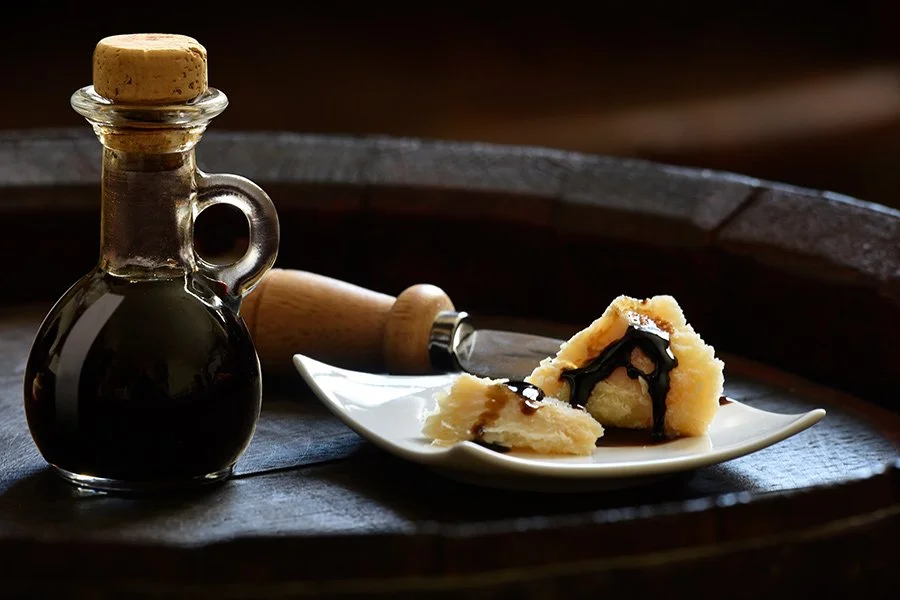
Aceto Balsamico e Parmigiano Reggiano
From Grapes to Barrels: The Journey of Aceto Balsamic
The heart of Aceto Balsamico lies in its origin in Modena and Reggio Emilia, in northern Italy, where tradition, climate and patience converge. The story begins with the grapes, typically Trebbiano and Lambrusco, carefully pressed to release their juice, or must. This is not ordinary grape juice. It is slowly cooked, reducing it to a rich, concentrated syrup that will form the base of the vinegar. From here, time becomes the real craftsman.
For the truly exceptional Aceto Balsamico Tradizionale DOP, this must is aged in a carefully orchestrated sequence of wooden barrels called a batteria. Each barrel is made from a different type of wood, such as oak, chestnut, cherry and juniper, imparting subtle layers of flavor, aroma and color. The barrels themselves are part of the story, some are decades old and each year, evaporation, concentration and slow transformation refine the liquid. Aging is measured not in months but in years, often twelve, fifteen or even twenty five years. Every drop is a quiet meditation on patience, balance and craft.
Meanwhile, the more widely available Aceto Balsamico di Modena PGI offers a different but still delightful experience. This version blends cooked grape must with a touch of wine vinegar and is aged for a minimum of sixty days. The result is a vinegar that balances sweetness and acidity, perfect for everyday use over salads, cheeses, grilled meats or even desserts. It may not carry decades in a barrel but it still carries tradition, care and the unmistakable Italian character.
What makes balsamic so extraordinary is not just the ingredients or the method, it is time itself. It is the rhythm of seasons, the choices of the producer and the subtle interplay of wood and liquid. The difference between DOP and PGI is not just in age or price, it is in personality, intensity and intimacy. One is a story decades in the making, the other is a versatile companion for daily life. Both, however, celebrate the same principle, every drop is a small masterpiece born from grapes, barrels and endless patience.
In short, understanding balsamic is about more than taste, it is about place, time and care. Every barrel has a voice and every bottle invites you to listen.
Using It Right (and What to Skip)
Balsamic is best when it’s the finishing touch, not the main ingredient. A few drops over Parmigiano, fresh strawberries, roasted vegetables, or a simple risotto can make a dish unforgettable. Avoid pouring it into the pan or using it with heavy sauces that mask its subtle complexity.
For authentic enjoyment, steer clear of products with caramel, colorants, or confusing labels. The traditional DOP is delicate and layered; the PGI is versatile and sweet-tart, but both reward attention and thoughtful pairing. Let it shine simply, and you’ll notice every nuance.
Balsamic vinegar isn’t just a condiment—it’s an invitation to slow down, taste deeply, and appreciate a story that’s been decades in the making.
Curious to visit traditional balsamic vinegar producers in person?
With The Italian Vibe, every visit is personally curated and organized just for you.