
Prosciutto di Parma: Italy’s Timeless Elegance in Cured Ham
Prosciutto di Parma is a masterpiece of Italian culinary heritage: delicate, refined, and shaped by centuries of careful tradition. Its subtle aroma, melt-in-the-mouth texture, and natural sweetness reflect a harmonious balance of climate, terroir, and human craftsmanship. Unlike cooked meats, it is meant to be enjoyed raw, a product of patience and restraint whose full elegance is revealed only when treated with care. Experiencing it in Emilia-Romagna transforms tasting into a bespoke, immersive lesson in flavor, technique, and history.
Genuine Prosciutto di Parma relies on only two or three essential elements: carefully selected pork, sea salt, and the influence of time and the dry, aromatic air of the Parma hills. No nitrites, nitrates, or added sugars are permitted, ensuring that every slice embodies authenticity and artisanal precision. The meat shows a uniform, deep pink hue, while the fat remains white or creamy, signaling perfect maturation and balance. Only pork legs from authorized Italian breeds are used, and the slow curing process depends entirely on natural conditions. This combination of geography, technique, and patience transforms simple ingredients into a product celebrated worldwide for its elegance, subtlety, and timeless refinement.
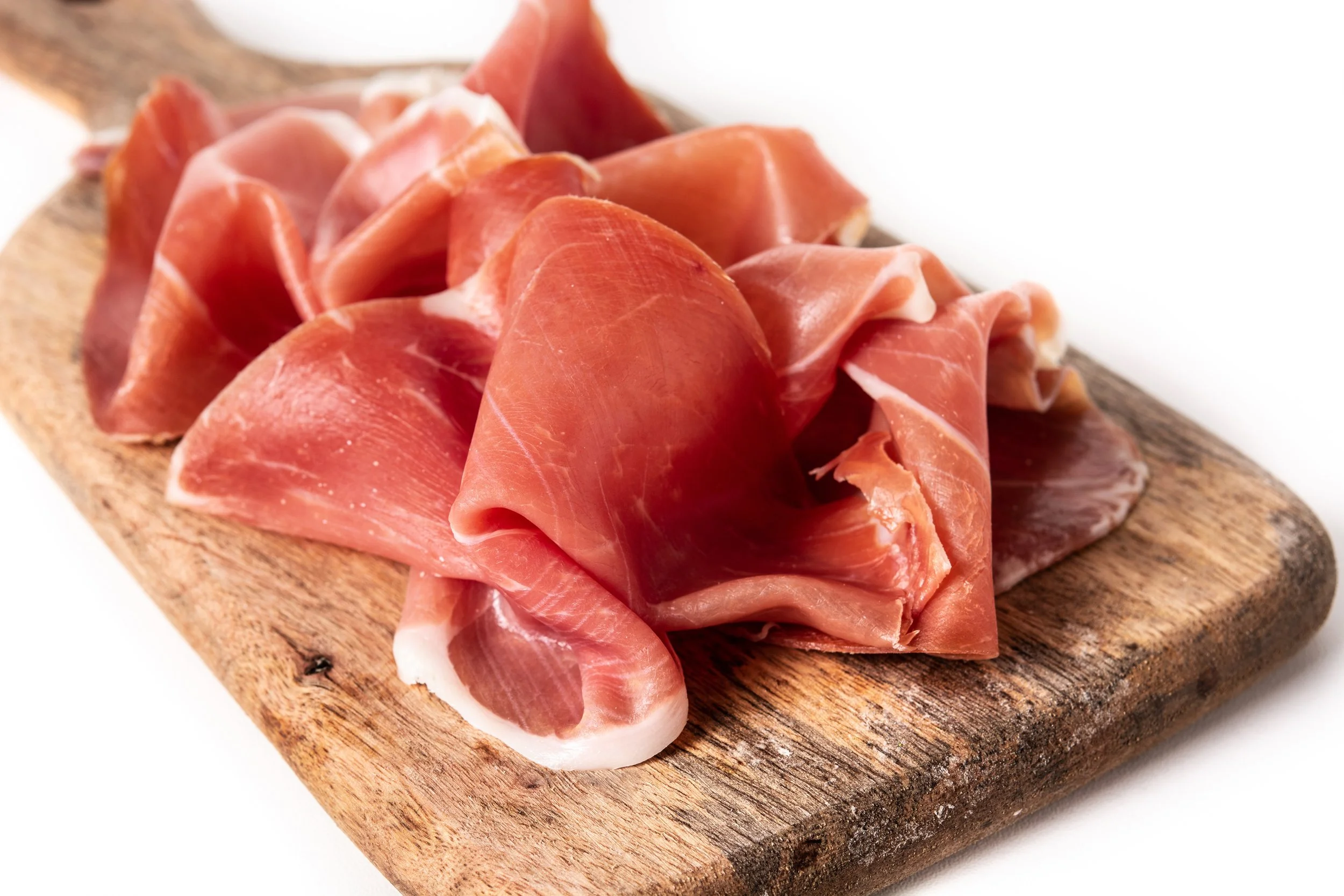
Prosciutto di Parma
A Heritage of Precision
The history of Prosciutto di Parma is deeply rooted in the gentle hills surrounding Parma, where the combination of fertile pastures, clean, temperate air, and mild seasonal variations provides ideal conditions for curing. The region’s microclimate, shaped by proximity to the Apennine Mountains and the Po Valley, allows hams to mature slowly and naturally, developing a refined aroma and texture impossible to replicate elsewhere.
Artisans have been perfecting this craft since the Middle Ages, when local butchers and monastic communities first sought methods to preserve pork while maintaining its natural flavor. Over centuries, these techniques evolved into a codified system, blending tradition with empirical knowledge of climate, humidity, and the influence of local flora on the air that flows through curing rooms. Today, the Consorzio del Prosciutto di Parma upholds these centuries-old standards, meticulously overseeing every stage: from careful selection of the pigs — raised in specific conditions and fed with high-quality grains and whey — to the precise hand-salting and extended aging process.
Each ham is salted by hand with sea salt, massaged gently to encourage uniform absorption, and then left to rest in specialized aging rooms. Here, a delicate interplay of airflow, humidity, and time shapes the ham’s signature fragrance, subtly sweet flavor, and silky texture. Hams are carefully turned and inspected regularly, ensuring that every wheel meets the strict standards required to earn the prestigious Parma seal. The result is a product celebrated worldwide for elegance, restraint, and balance — a true embodiment of Emilia-Romagna’s artisanal heritage.
Beyond the technical mastery, the history of Prosciutto di Parma is also a story of patience, care, and respect for the ingredient. It is a product that cannot be rushed: every stage, from the first hand-rubbed layer of salt to the final slice, reflects an intimate knowledge of terroir, climate, and time. This combination of geography, tradition, and human expertise is what transforms a simple leg of pork into an extraordinary culinary treasure.
Experiencing Prosciutto di Parma Firsthand
Visiting a production site is essential for a true understanding of Prosciutto di Parma. I frequently organize trips with chefs to witness the curing process and learn to distinguish subtle differences between maturations. Private tastings reveal the depth of skill behind each ham and offer insight into why time and careful handling are crucial. Walking through the aging rooms, the fragrance of hams in progress becomes a sensory introduction to the region itself. At the table, Prosciutto di Parma pairs beautifully with local traditions.
Classic accompaniments include gnocco fritto and tigella, two traditional breads of Emilia-Romagna and Modena that perfectly complement the delicate flavor of Prosciutto di Parma. Gnocco fritto is a light, airy dough fried until golden and slightly crisp on the outside, yet soft and pillowy within; its subtle richness provides a gentle contrast to the ham’s melt-in-the-mouth texture. Tigella, also known as crescentina, is a small, round flatbread traditionally baked in a special terracotta press, creating a tender interior and a lightly toasted exterior. Both breads are ideal for wrapping slices of ham, allowing the prosciutto’s aroma and subtle sweetness to shine while adding a warm, comforting bite that elevates the tasting experience.
Another exquisite pairing is fresh seasonal melon, whose gentle sweetness contrasts beautifully with the ham, accompanied by a glass of fine Chardonnay or a dry Lambrusco, both of which enhance the flavor of the prosciutto without overwhelming its delicate texture and aroma.
Prosciutto di Parma should never be cooked; for pizza lovers, it is best added after baking, preserving its texture, aroma, and delicate flavor. Luxury dining in Parma, from intimate trattorias to Michelin-starred tables like I Portici, celebrates Prosciutto di Parma with thoughtful pairings and seasonal attention. Experiencing the ham in its territory, whether through a guided tasting or a curated visit with chefs, transforms it from a simple ingredient into a reflection of Emilia-Romagna’s culinary elegance and meticulous tradition.
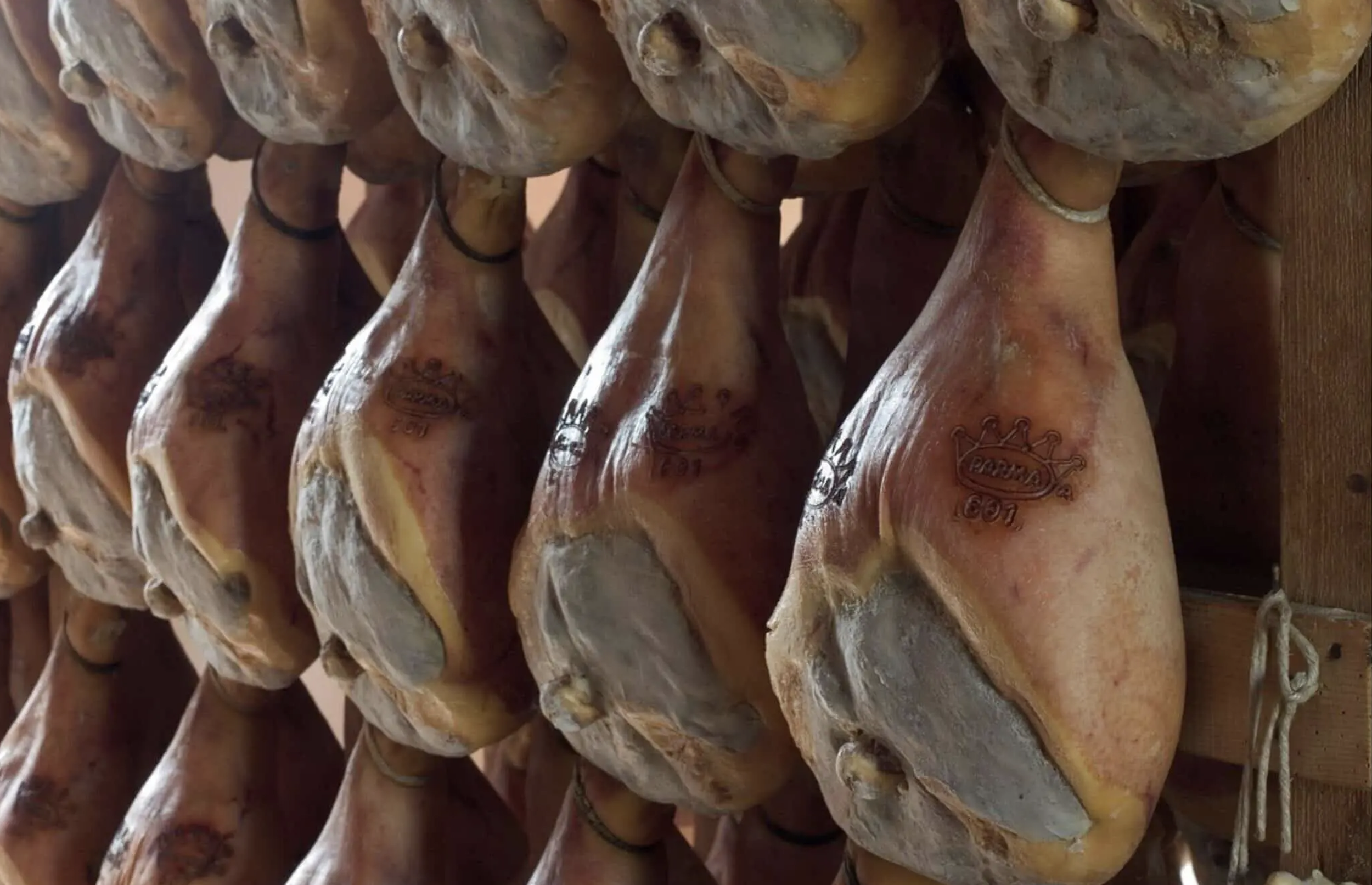
Prosciutto di Parma - maturation
It is said that gentle winds from the Apennines circulate through the aging rooms, guiding the slow maturation that gives Prosciutto di Parma its delicate aroma, silky texture, and refined, slightly sweet flavor.
This tradition, passed down for centuries, is likely why no other prosciutto can truly be compared to Parma. Hams produced in the U.S., for example, tend to be darker, firmer, and more intensely savory, while Parma prosciutto is balanced and nuanced, offering subtle sweetness, melt-in-the-mouth tenderness, and enduring elegance.
Curious to visit Prosciutto di Parma producers in person?
With The Italian Vibe, every visit is personally curated and organized just for you.