
Let’s Go to Aosta
Aosta moves at its own pace. Compact and self-contained, it is a city where history, landscape, and daily life remain in natural balance. Stone streets, Roman remains, and mountain air shape an atmosphere that feels composed rather than curated, defined by continuity instead of contrast.
Often misunderstood as a simple alpine stopover, Aosta reveals its depth only to those who pause. Its historic center is compact and legible, shaped by centuries of continuity rather than reinvention. Roman ruins coexist naturally with cafés, shops, and local routines, creating a sense of place that feels lived-in and precise. Nothing is staged; nothing is rushed.
Founded in 25 BC as Augusta Praetoria, Aosta was conceived as a strategic Roman city controlling the Alpine passes between Italy and northern Europe. Its original structure remains intact and readable: straight streets, defensive walls, monumental gates, and public spaces that still guide movement today. History here is not decorative; it is structural.
Over the centuries, Aosta absorbed influences from France, Switzerland, and the wider Alpine world, shaping a cultural identity that is discreet, resilient, and unmistakably European. This is a place where strength has always meant endurance. Stone, craftsmanship, and proportion define the city’s character more than ornament or display.
For me, Aosta is tied to memory. When I was young, it was here that I began my first tastings outside my native Piemonte, learning how wine expresses altitude, climate, and patience. It was here that I discovered how the rocky soils, the cold, and the snow give these wines a truly unique character. The native grape varieties, accustomed to these harsh soils and mountain conditions, thrive in this environment, producing wines rich in minerality, with naturally balanced acidity that reflects the precision and elegance of the high-altitude landscape.
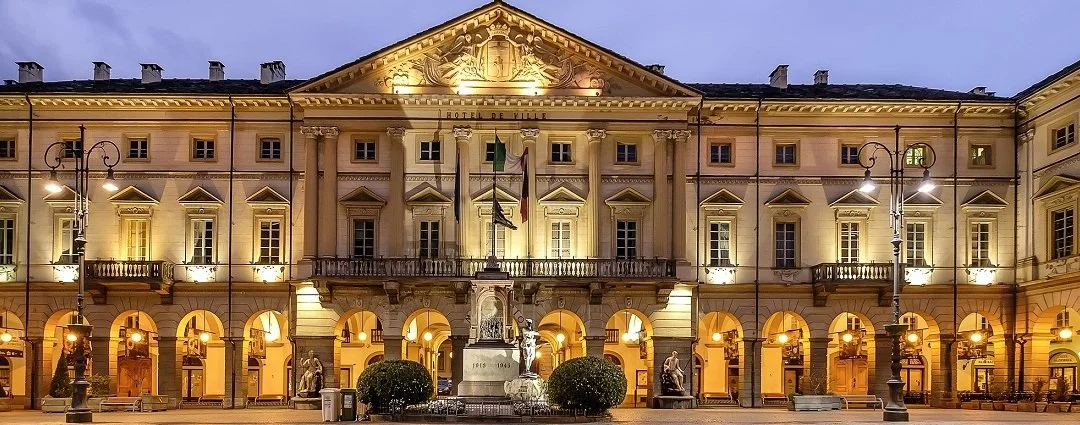
Night view of Aosta’s City Hall
Places to See
Aosta’s historic center unfolds with clarity. Porta Praetoria marks the Roman entrance to the city, while the Arch of Augustus stands as a reminder of continuity rather than conquest. The Roman Theatre, rising unexpectedly among modern buildings, recalls the city’s original scale and ambition without overwhelming its present balance.
Religious architecture introduces a quieter dimension. The Cathedral of Santa Maria Assunta and the Collegiate Church of Sant’Orso offer spaces of reflection, with frescoes, cloisters, and stone that invite pause rather than spectacle.
Beyond the city, castles shape the surrounding valleys. Fénis, Issogne, Verrès, and Sarre each tell a different chapter of Valle d’Aosta’s history, from fortified power to refined residence. Visiting them feels like reading the territory through architecture, valley after valley.
No visit to the Valle d’Aosta is complete without seeing Fort Bard. Perched dramatically at the entrance to the valley, stands as one of the most powerful symbols of the region. this 19th-century fortress once controlled access between Italy and northern Europe. Today, it has been thoughtfully transformed into a cultural hub, hosting exhibitions, photography shows, and events that bridge history and contemporary expression. Its architecture is commanding yet refined, and the views from its terraces stretch across the valley with striking clarity. Visiting Fort Bard offers a broader perspective on the Valle d’Aosta, one that connects military history, landscape, and modern cultural life in a single, memorable stop.
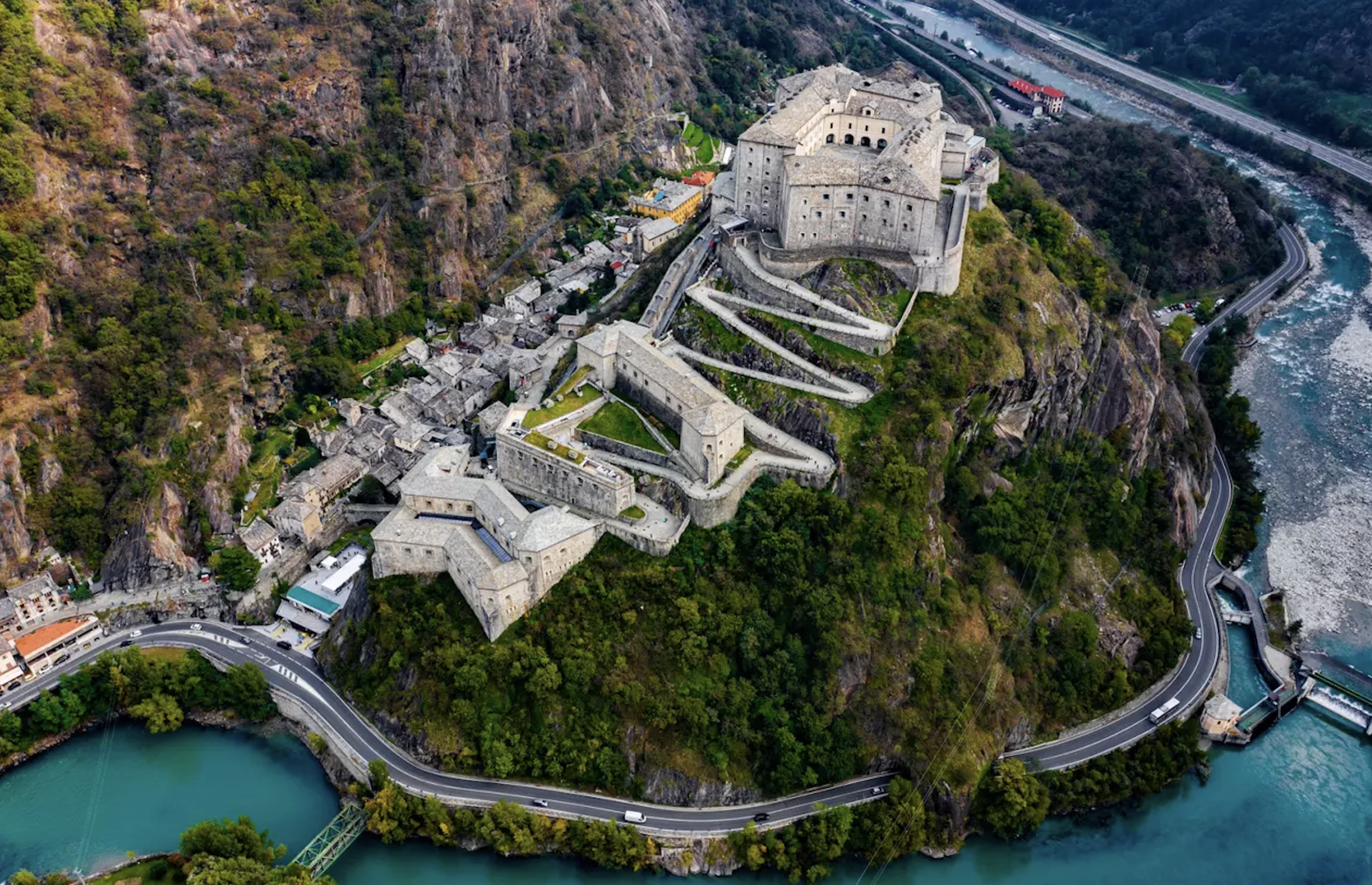
Fort Bard, standing proudly at the gateway to the Aosta Valley
What to Do
Life in Aosta is deeply connected to food, wine, and seasonality. Cuisine here is not interpretive; it is rooted. Local restaurants celebrate mountain products with confidence and restraint: Fontina DOP, cured meats, rye bread, butter, and polenta form the backbone of a cuisine designed to nourish and endure. Dishes are generous but measured, shaped by climate rather than trend.
Wine is inseparable from this experience. Valle d’Aosta produces some of Italy’s most distinctive alpine wines, shaped by steep vineyards and extreme conditions. Petite Arvine, Fumin, Cornalin, and Blanc de Morgex et de La Salle offer wines that are vertical, mineral, and precise. Sitting at the table with these bottles is a way of understanding the landscape itself, something I first learned here, glass by glass.
Every January, the city comes alive with the Fiera di Sant’Orso. The historic center fills with artisans presenting woodwork, sculptures, and objects rooted in daily life and tradition. It is not folklore, but living craftsmanship: a moment that belongs entirely to Aosta and its people.
From Aosta, the mountains are not an escape; they are a continuation. Courmayeur, set beneath Mont Blanc, pairs high-level skiing with an elegant alpine lifestyle, where design hotels, thermal spas, and exceptional dining define the experience. Properties such as Auberge de la Maison and Grand Hotel Royal e Golf offer intimate luxury, wellness, and impeccable service, while the Skyway Monte Bianco lifts the experience into one of the most dramatic viewpoints in Europe.
Closer to the city, Pila is reached directly from Aosta, offering panoramic slopes and a relaxed, discreet atmosphere that mirrors the city’s own rhythm. Cervinia, expansive and dramatic, attracts those drawn to altitude and scale, with seamless access to Zermatt and a more international feel.
Wellness completes the alpine experience. QC Terme Pré-Saint-Didier, housed in a Belle Époque complex, offers thermal pools overlooking the mountains: restorative, iconic, and deeply connected to place. Dining in the region reflects the same philosophy, with Michelin-recognized tables such as La Maison de Filippo and Vecchio Ristoro, where alpine tradition meets contemporary finesse and hospitality remains sincere.
Evenings return gently to the city. Wine bars and restaurants fill without noise, conversations linger, and the mountains feel closer as the light fades. Aosta does not seek attention. It offers coherence, authenticity, and a sense of place that stays with you.
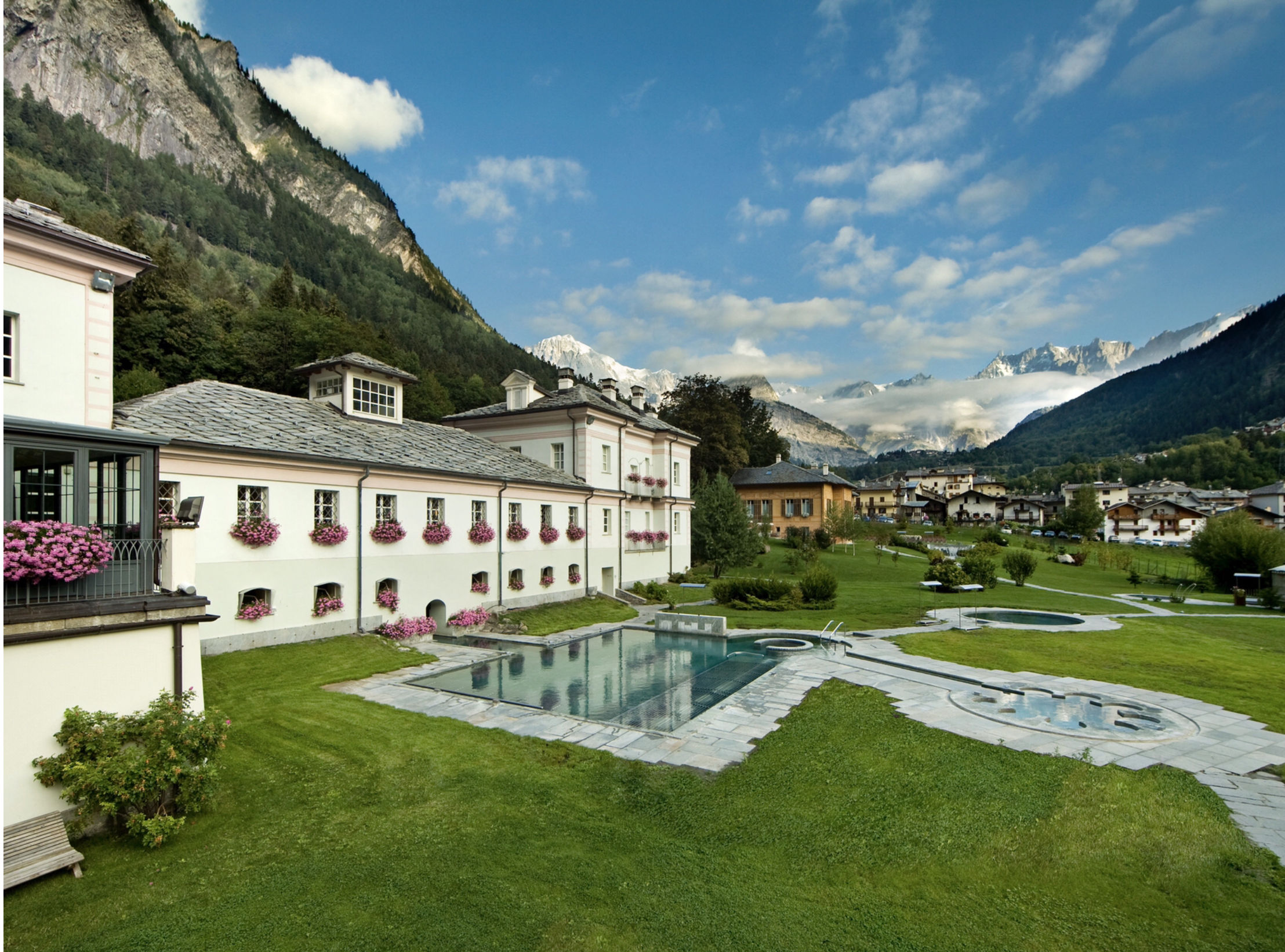
QC Terme Pré-Saint-Didier
Would you like to visit Aosta?
With The Italian Vibe, every visit is personally curated,
offering exclusive access to vineyards, cellars, and tastings — crafted entirely for you.