
Lambrusco : The Sparkling Heritage of Emilia-Romagna
Lambrusco is among Italy’s most ancient wine expressions, with roots that reach back to classical antiquity. Roman authors already referenced wild and cultivated vines in the plains of today’s Emilia-Romagna, suggesting an early familiarity with grapes belonging to the Lambrusco family.
Over centuries, these native varieties were progressively selected and refined, becoming an integral part of the agricultural and cultural identity of the area between Modena and Reggio Emilia. Unlike many European wines shaped by a single dominant grape, Lambrusco evolved as a constellation of varieties, each adapting to specific soils and microclimates. This long process of natural and human selection eventually led to clearly defined styles, formally recognised in the twentieth century with the establishment of protected denominations such as Lambrusco di Sorbara, Lambrusco Grasparossa di Castelvetro and Lambrusco Reggiano.
Alongside these territorial distinctions, Lambrusco developed different expressions of sweetness and effervescence. For several decades, particularly in the second half of the twentieth century, sweeter styles dominated production and international perception. Today, dry expressions are gaining prominence, reflecting current tasting trends and the modern pursuit of quality. These drier wines highlight the true character of the grapes, unmasked by sweetness, revealing freshness, precision and a transparent expression of terroir.
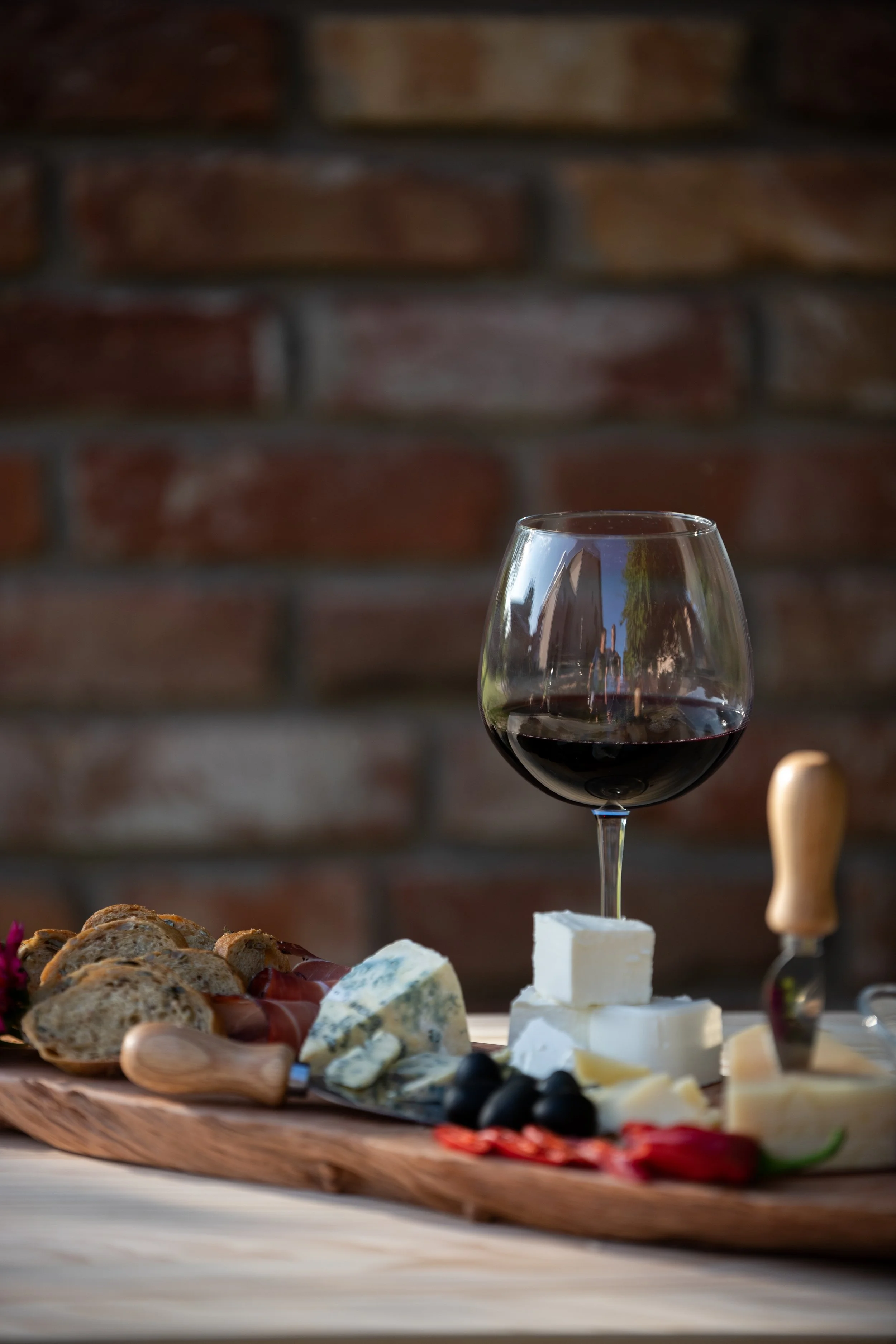
Lambrusco, classically paired with salami and cheese.
The terroir of Lambrusco is defined by fertile alluvial plains formed by ancient river systems, where sandy and silty soils favour freshness, aromatic clarity and natural acidity. The climate, marked by warm summers and cooling influences, supports balanced ripening and preserves vibrancy in the grapes.
Lambrusco di Sorbara is particularly prized for its pale colour, floral elegance and linear structure, while Salamino and Grasparossa bring richness, depth and darker tonalities. Viticulture in the region has evolved from traditional high training systems to more precise, quality-driven practices, with lower yields and careful vineyard management. In parallel, winemaking has undergone a profound transformation.
While tank fermentation once dominated, today the most ambitious producers increasingly embrace bottle fermentation, including Metodo Classico, as a means to express complexity, texture and longevity. This technical evolution has played a key role in redefining Lambrusco’s stylistic range, allowing dry wines to achieve clarity and tension, while more rounded interpretations are now approached with restraint and balance rather than overt sweetness.
How to Experience the Wine and the Region
Contemporary Lambrusco finds its highest expression in refined, dry sparkling styles that reveal both energy and composure. At the table, its natural acidity and fine effervescence make it an exceptional partner for the cuisine of Emilia-Romagna, enhancing flavours while maintaining balance. Served cool rather than cold, Lambrusco offers aromatic precision, subtle salinity and a vibrant palate. Sweeter styles, once dominant and still appreciated in certain contexts, now coexist with a new generation of dry interpretations that define the modern identity of the wine and showcase the quality of the grape itself, unbiased by sugar. Experiencing Lambrusco within its region adds essential context. The landscape between Modena and Reggio Emilia is a discreet mosaic of vineyards, historic towns and artisanal producers, where culinary and wine traditions are interwoven. Here, Lambrusco is not a statement wine, but a cultural constant, understood through repetition, craftsmanship and place.
Lambrusco’s significance today lies in its ability to redefine contemporary luxury through authenticity and restraint. Its evolution demonstrates how heritage, when interpreted with ambition and technical mastery, can generate wines of international stature without abandoning identity. In its finest expressions, Lambrusco stands confidently among the world’s great sparkling wines, offering a distinct voice shaped by history, terroir and vision.
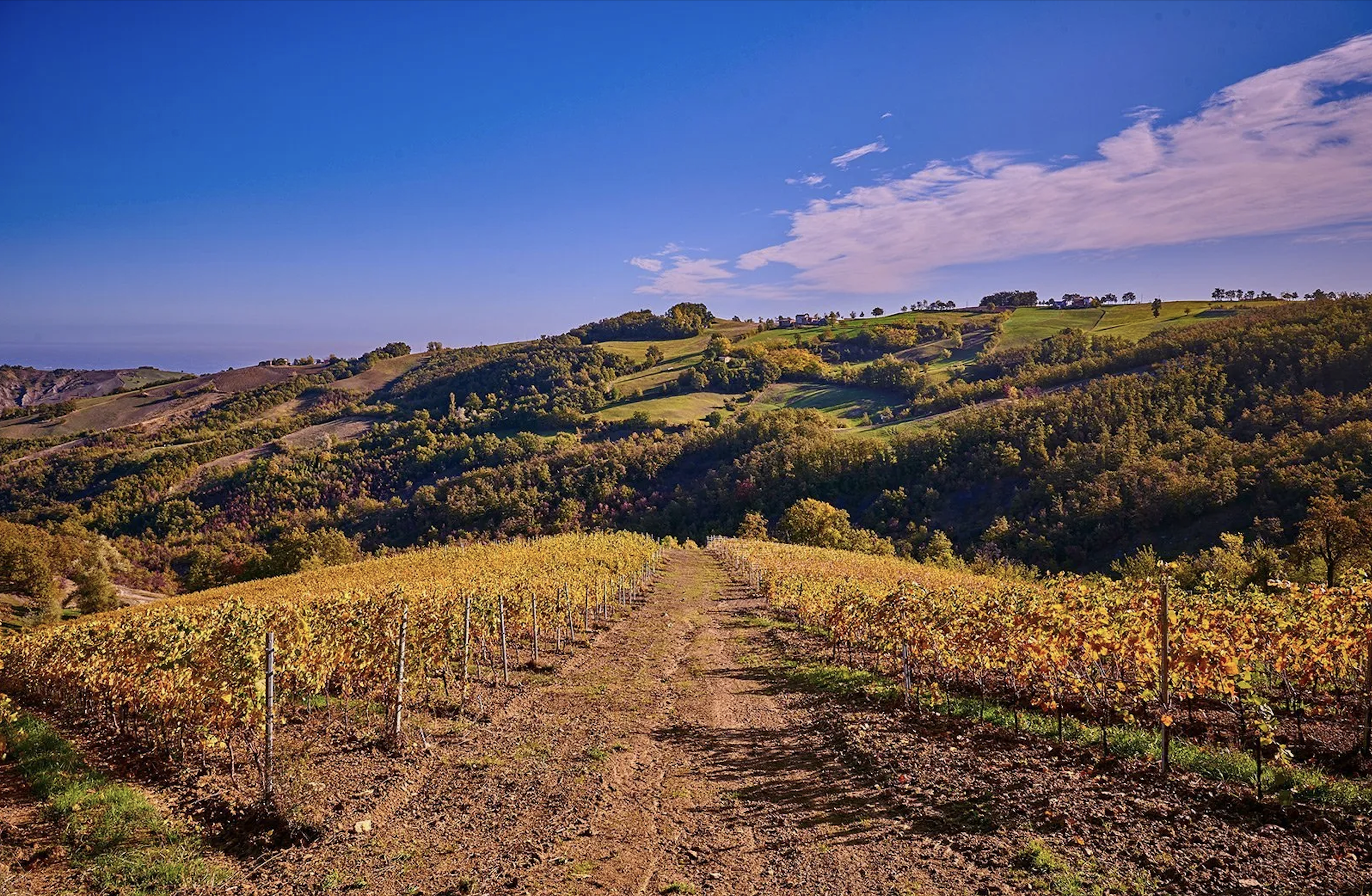
A view on Lambrusco vineyards in Bomporto
During my first professional years as a sommelier in the early 2000s, Lambrusco was mostly requested in its classic sweet style, traditionally paired with salami or Parmigiano Reggiano. The gentle bubbles lifted the palate while the hint of sweetness created a contrast with the savoury richness of these foods. Over time, however, I began to notice a shift : more and more clients and colleagues were asking for dry, refined Lambrusco, often produced with Metodo Classico, which showcased the true character of the grape without relying on sugar. It was during this period that I first discovered Cantina della Volta, a producer whose vision and meticulous craftsmanship completely transformed my perception of what Lambrusco could be.
Among the producers who have most clearly embodied this evolution, Cantina della Volta holds a singular position. Located in Bomporto, within the historic Sorbara zone, the winery has chosen Metodo Classico as its sole path, dedicating extended time and precision to Lambrusco di Sorbara. Long ageing on the lees, exacting craftsmanship and a deep respect for varietal character result in wines of exceptional finesse, structure and longevity. Internationally recognised and frequently compared, in terms of elegance and complexity, to the finest Champagne, Cantina della Volta represents one of the highest and most compelling expressions of Lambrusco today.

Giorgio Angiolini of Cantina della Volta pouring Lambrusco di Sorbara at Allora in Sacramento during a private tasting event, 2024.
Curious to explore more?
With The Italian Vibe,
every experience is crafted entirely around your interests and desires,
creating a journey designed just for you.