
Pesto alla Genovese, A Sauce That Tells the Story of Liguria
Pesto alla Genovese is one of the most iconic expressions of Italian regional cuisine and a true symbol of Liguria. Its name comes from the Genoese verb pestare, meaning to pound, a direct reference to the traditional preparation method using a marble mortar and wooden pestle.
The roots of pesto go back much further than its first written recipe. Ancient Roman texts describe a sauce called moretum, made by crushing herbs, garlic and cheese, which many historians consider the ancestor of modern pesto. During the Middle Ages, Ligurian cuisine already relied heavily on garlic based sauces such as agliata, used both for flavor and preservation.
The first documented recipe resembling today’s pesto alla Genovese appears in the 19th century in Genoa. From that moment on, the sauce became a defining element of local identity, spreading from home kitchens to trattorie and eventually beyond Italy. Despite its global success, pesto remains deeply tied to its territory, so much so that Genoa hosts international competitions dedicated exclusively to the traditional mortar made version.
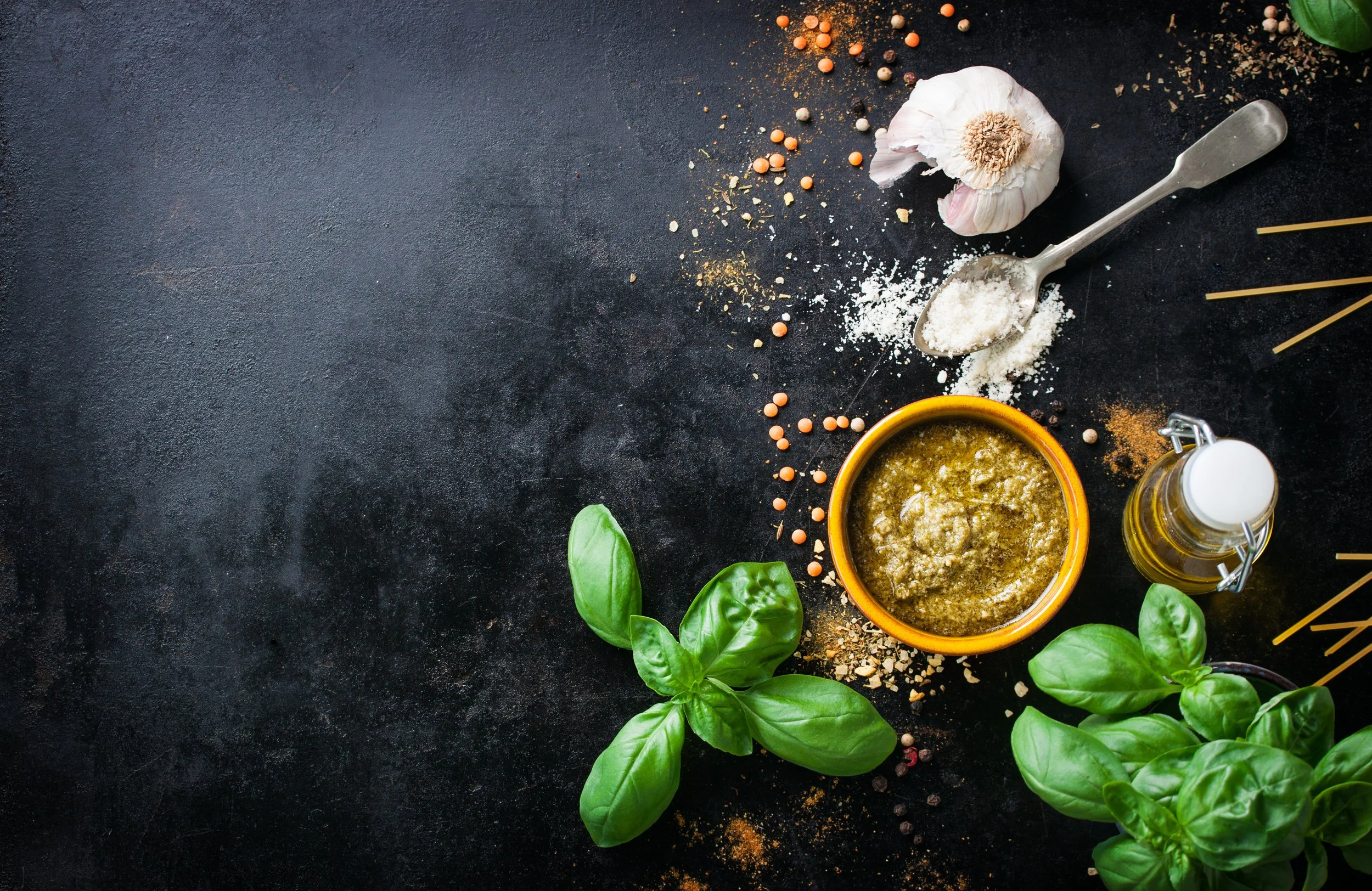
The making of Pesto alla Genovese
How It Is Made and How to Enjoy It
Authentic pesto alla Genovese is built on a precise balance of few ingredients, each one essential and traditionally sourced from Liguria. The cornerstone is Basilico Genovese DOP, grown in the mild coastal climate around Genoa, especially in the area of Prà, where the soil and sea air give the leaves their unmistakable aroma and sweetness.
Garlic, traditionally from Vessalico, is used sparingly to avoid overpowering the basil. Pine nuts add roundness and texture, while Parmigiano Reggiano DOP and Pecorino provide depth and savory notes. Everything is bound together with extra virgin olive oil from the Riviera Ligure, known for its delicate and slightly sweet profile.
The classic method requires patience and technique. Basil leaves are gently crushed, never cut, to prevent oxidation and bitterness. This slow process preserves color, fragrance and structure, producing a sauce that is vibrant, aromatic and balanced. While blenders are widely used today, the traditional method remains the reference point for quality.
Pesto is most famously paired with trofie or trenette pasta, often served with boiled potatoes and green beans, a combination that reflects the Ligurian habit of stretching flavors with vegetables rather than excess fat. Beyond pasta, pesto is used to enrich soups like minestrone alla genovese, spread on focaccia or paired with grilled fish and vegetables.
When it comes to wine, Ligurian whites such as Vermentino or Pigato are ideal companions. Their freshness, minerality and citrus notes complement the herbal intensity of the sauce without competing with it.
What to See in the Area
Understanding pesto means understanding Genoa and its surroundings. The historic center of Genoa, one of the largest medieval old towns in Europe, is where pesto evolved from a household staple to a culinary symbol. Walking through its narrow alleys, known as caruggi, you will find traditional trattorie where pesto is still prepared daily according to family recipes.
Just west of the city lies Prà, an area closely associated with Basilico Genovese. Here, basil cultivation has become a cultural heritage as much as an agricultural activity. Moving east, the Ligurian coast opens up into postcard landscapes such as Portofino and the Gulf of Tigullio, where pesto appears on menus alongside fresh seafood and local wines.
Further along the coast, the Cinque Terre villages offer a dramatic backdrop of terraces, vineyards and sea views. While each village has its own culinary identity, pesto remains a constant presence, connecting food, land and tradition.
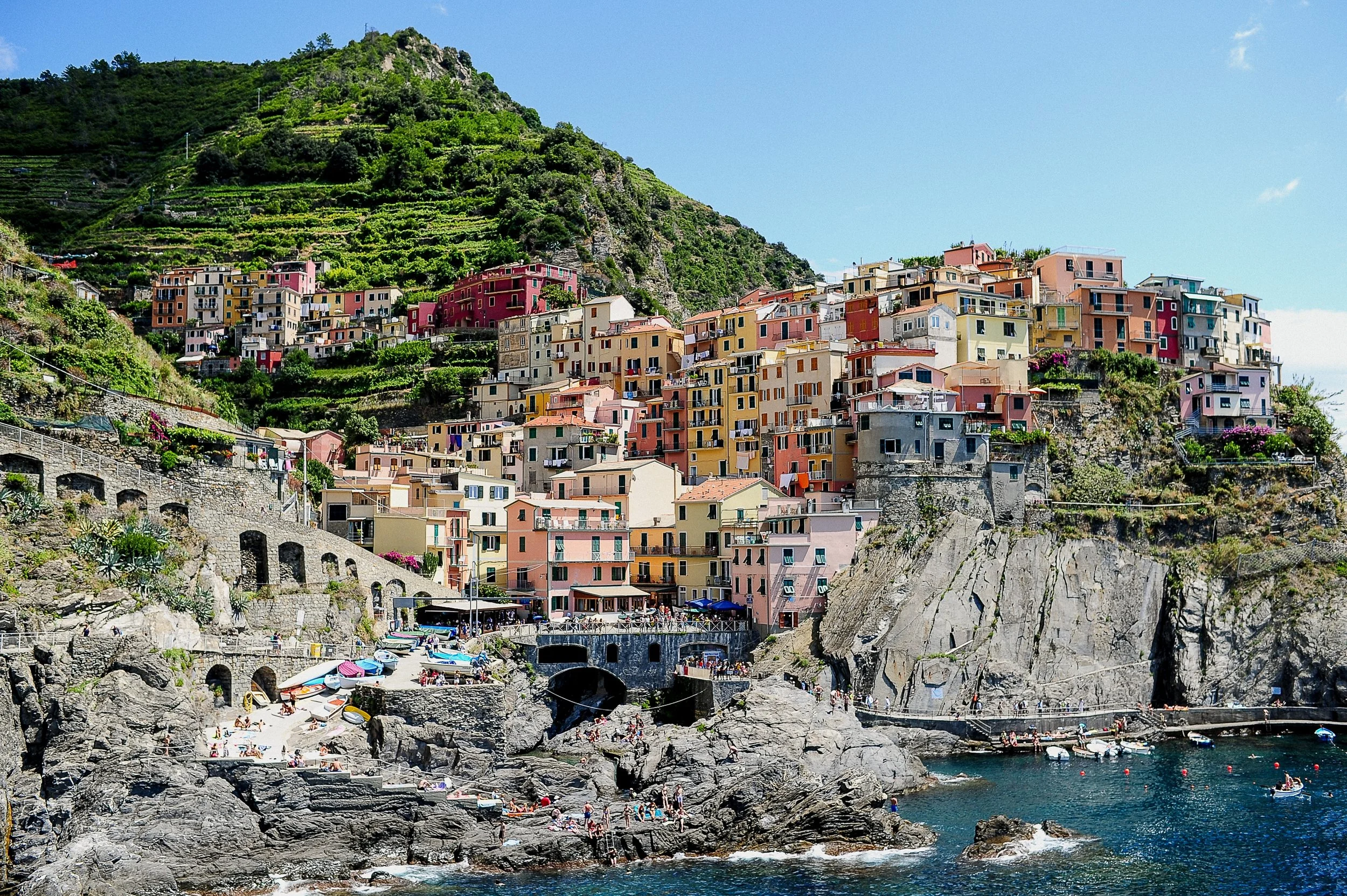
Cinque Terre, Liguria
Pesto alla Genovese is not just a recipe but a reflection of Liguria itself. It tells a story of scarcity turned into elegance, of respect for raw materials and of flavors shaped by geography. Every spoonful carries centuries of history, the scent of basil fields and the rhythm of a region where simplicity is the highest form of sophistication.
Curious to explore more?
With The Italian Vibe,
every experience is crafted entirely around your interests and desires,
creating a journey designed just for you.