
Parmigiano Reggiano: A Journey into Italy’s King of Cheese
Parmigiano Reggiano is one of the clearest expressions of Italian food culture: a product shaped by geography, tradition, and time.
It is made in a very specific area of Emilia-Romagna and nowhere else, using only milk, salt, and rennet, and following rules that have been refined over centuries. Its value does not come from complexity of ingredients but from restraint, precision, and patience.
More than a cheese, Parmigiano Reggiano is a shared cultural reference. It is present in daily life, in celebrations, and in the quiet gestures of the kitchen. To understand it properly, it must be approached through its history, its use, and the place where it is made.
Parmigiano Reggiano
A Thousand Years of History in Every Wheel
The origins of Parmigiano Reggiano go back to the Middle Ages, when Benedictine and Cistercian monks in the Po Valley sought a way to preserve surplus milk without losing quality. What they developed was a cheese capable of aging for years, gaining depth rather than losing character. That intuition became a system that still defines production today.
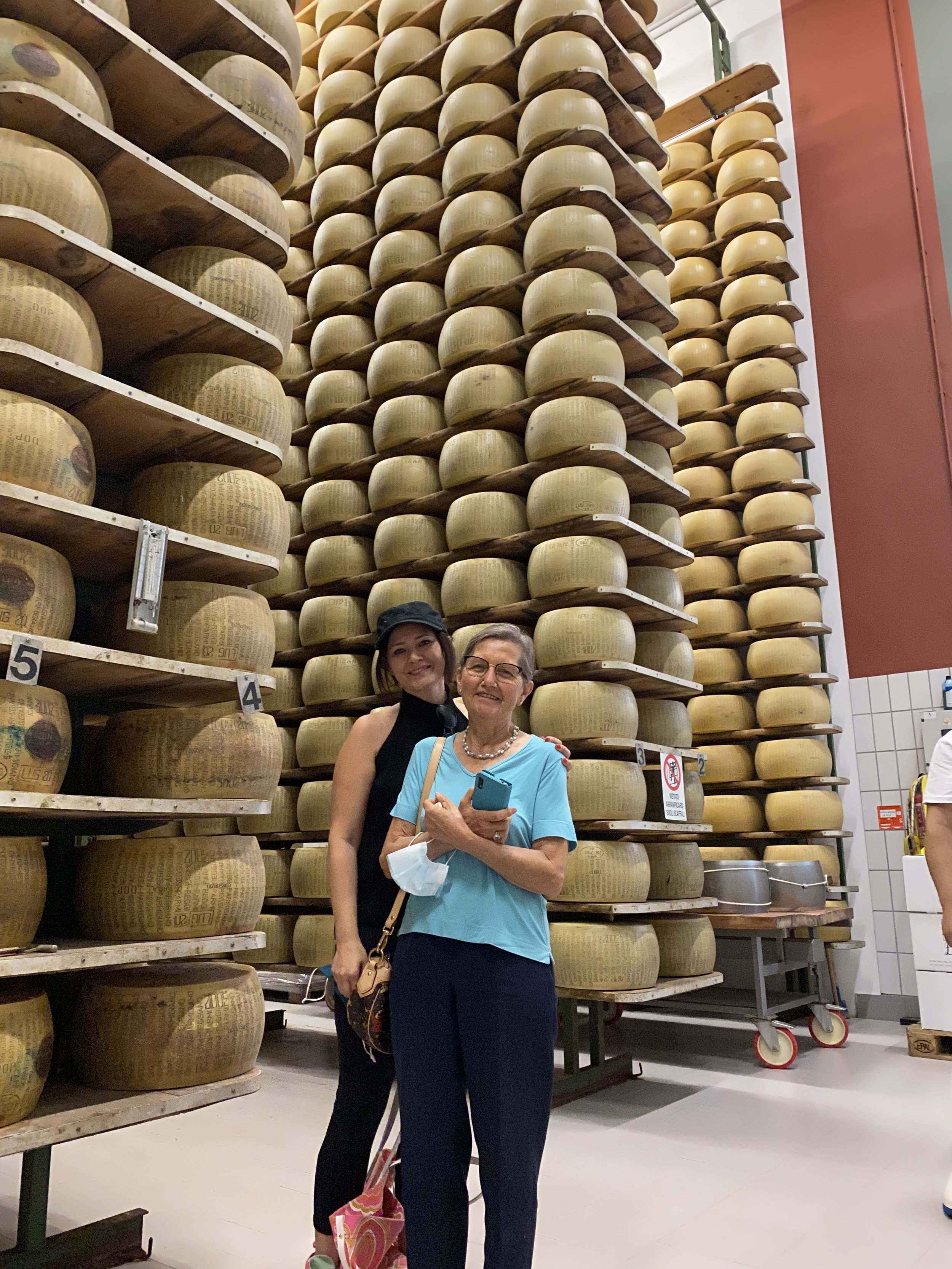
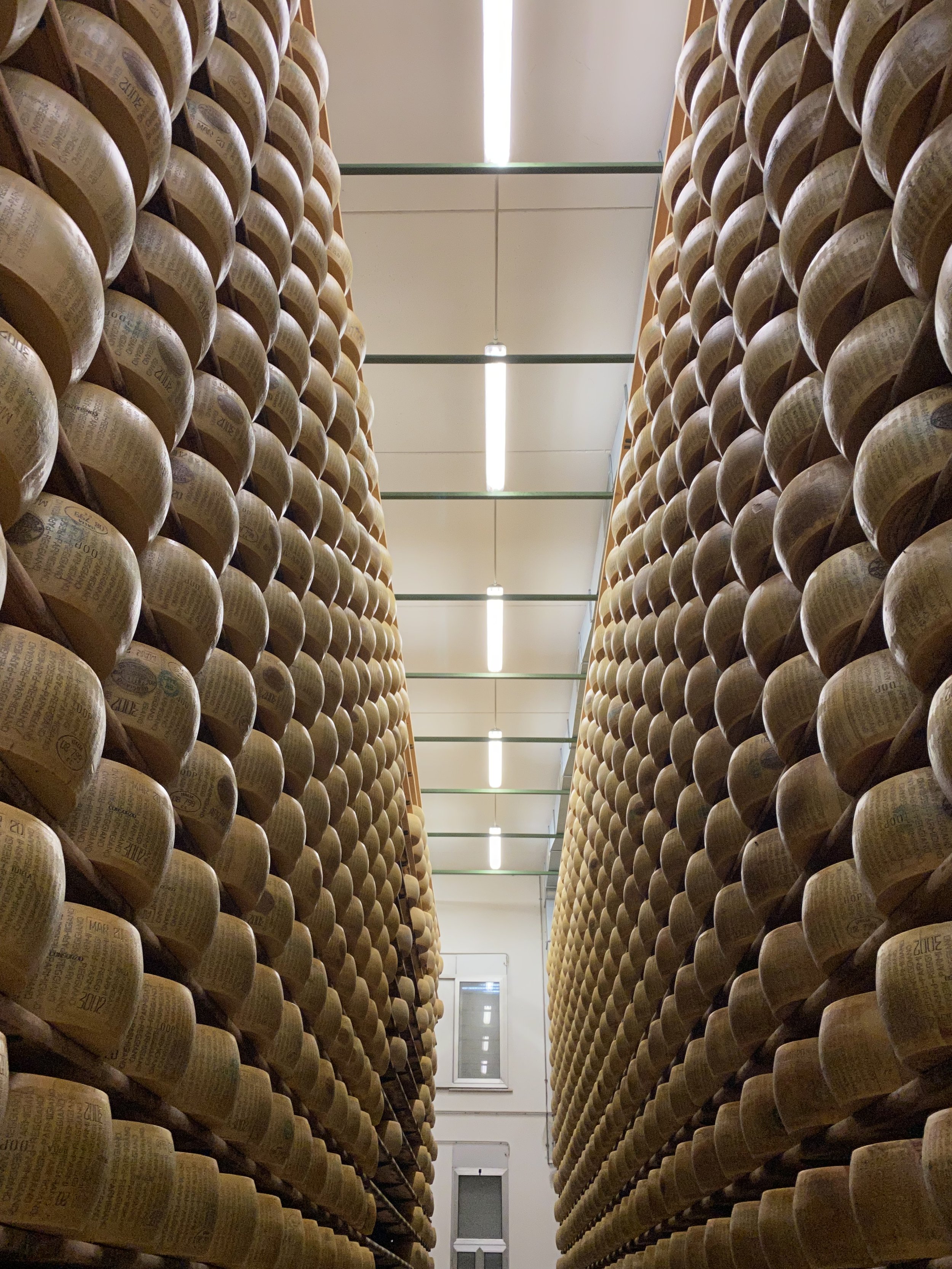
Each wheel is made with milk collected from the production area, processed in copper vats and shaped by hand. After salting, the cheese begins a long aging process, resting in controlled conditions for a minimum of twelve months, often much longer. During this time, every wheel is inspected, turned, cleaned, and tested. Only those that meet the standards earn the Parmigiano Reggiano mark.
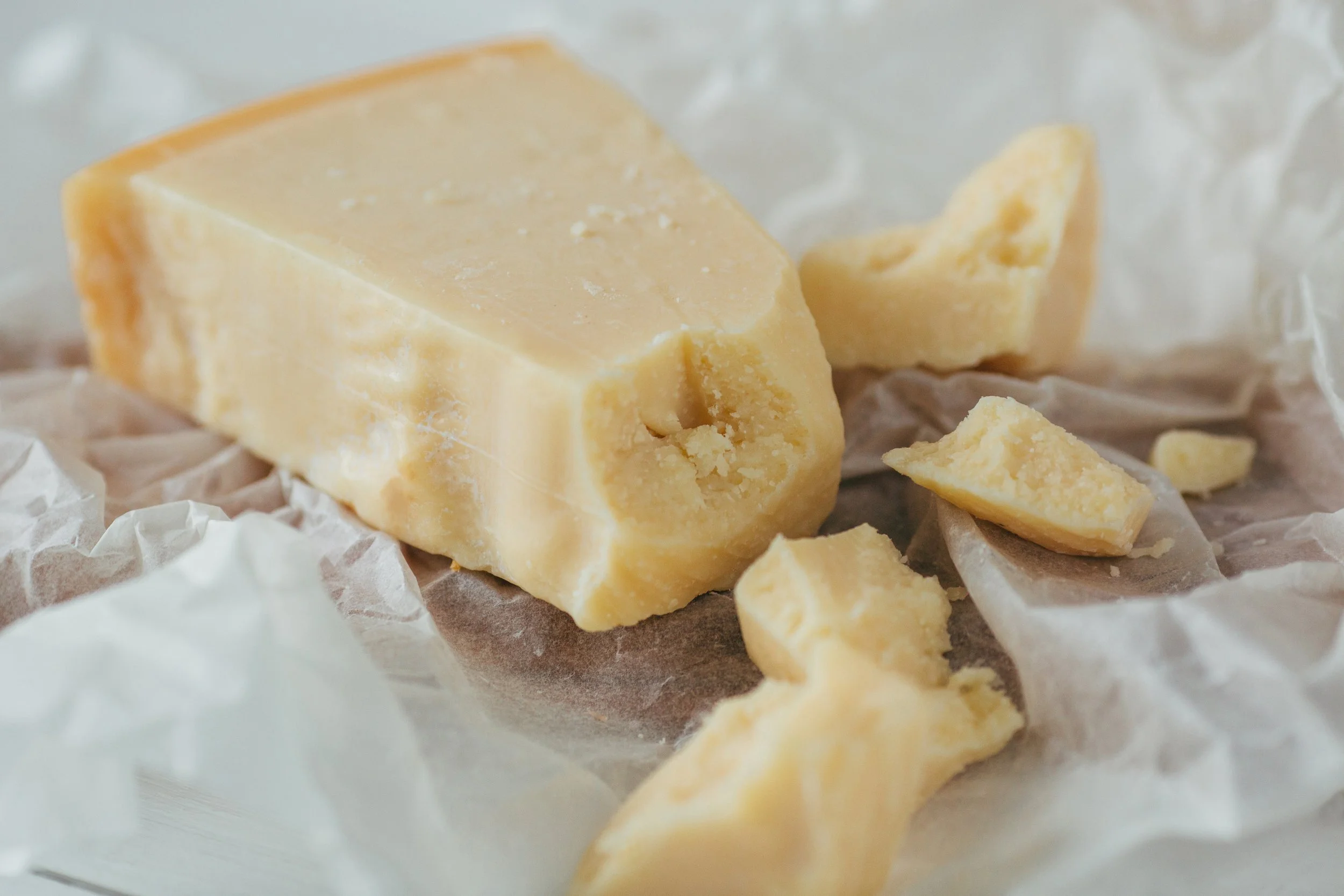
In Italian kitchens, Parmigiano Reggiano is never an afterthought. It is broken into irregular pieces rather than sliced, so its natural structure is respected. It is eaten on its own, offered at the table before or after meals, paired with seasonal fruit, nuts, honey, or a few drops of traditional balsamic vinegar. In cooking, it is used to add depth rather than dominance, enriching risotti, pasta, soups, and fillings. Even the rind has value, slowly released into broths to add flavor. This is a cheese that teaches moderation and attention.
Experiencing Parmigiano Reggiano Where It Is Made
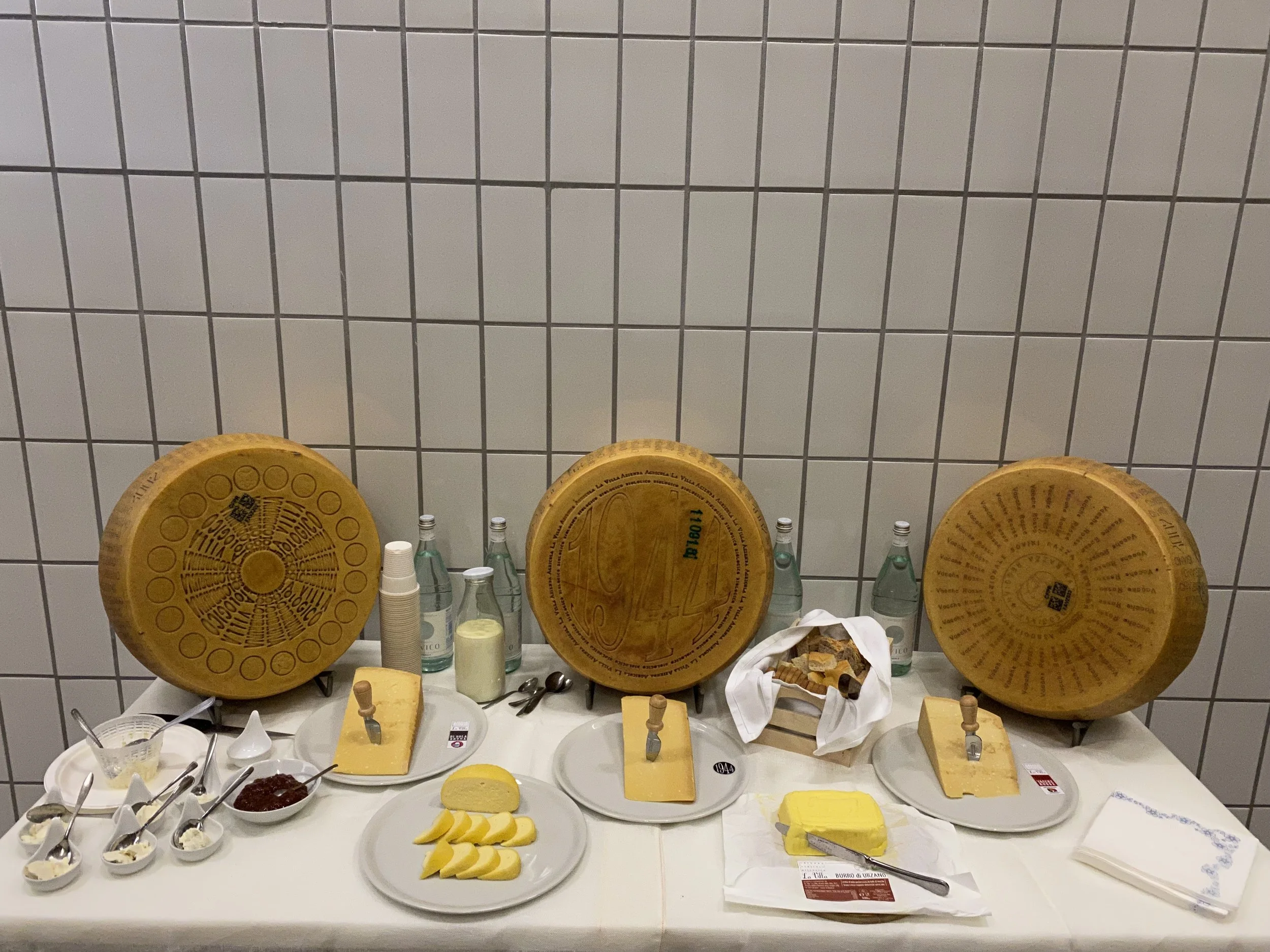
Seeing Parmigiano Reggiano produced is essential to understanding its true value. Production begins at dawn, when fresh milk arrives at the caseificio and the day unfolds with quiet precision, shaped by gestures repeated for generations. In this same space, the dairy also produces other fresh specialties, such as butter and ricotta, allowing visitors to grasp the full expression of milk as a living ingredient, transformed in multiple ways within a single morning. This continuity, where nothing is wasted and everything has purpose, lies at the heart of the region’s food culture.
The transformation from milk to curd, from curd to wheel, takes only a few hours, yet the real work of Parmigiano Reggiano begins afterward. Wheels mature slowly, resting for months and often years in vast aging rooms where time, humidity, and human attention shape their character. A customized visit offers access to these spaces, guided by those who know each wheel by sound and touch. Tastings are curated to compare different maturations, often alongside other dairy products made on site, revealing how the same milk can express freshness, creaminess, or depth depending on time and technique.
At the table, Parmigiano Reggiano reveals why it is used in countless preparations across Italy and far beyond its borders. Massimo Bottura, born and raised in Modena and one of the most influential chefs in the world, has long celebrated Parmigiano Reggiano as a cornerstone of his cuisine. His flagship restaurant, Osteria Francescana in Modena, holds three Michelin stars and has been ranked among the world’s best; his Gucci Osteria concepts have earned Michelin recognition in Florence, Tokyo, Seoul, and also Los Angeles, bringing his Italian creativity to the United States with menus that reflect both local ingredients and deep respect for Italian terroir. In all of these kitchens he uses Parmigiano Reggiano not as a garnish but as a structural element, capable of adding depth, elegance and emotion to a plate.
In Emilia-Romagna, this philosophy is already present in traditional dishes. Tortelli in brodo are prepared with fresh egg pasta and a meat-based filling, then served in a clear, slow-simmered broth, finished at the table with generous amounts of freshly grated Parmigiano Reggiano, which melts into the broth and gives it depth and structure. Elsewhere, it appears folded into fresh pasta, melted into risotti, or served simply in aged shards, where its natural crystallization becomes part of the experience. Thanks to its long maturation, Parmigiano Reggiano is naturally lactose-free, making it as accessible as it is refined.
Paired with the surrounding landscape and other regional products, the experience moves beyond gastronomy. It becomes a quiet, intimate way of understanding a territory through time, texture, and taste.
One final clarification is necessary. Parmigiano Reggiano and “parmesan” are not the same product.
Parmigiano Reggiano is protected, deeply tied to its place of origin, and shaped by centuries of precise production rules.
“Parmesan,” by contrast, is a generic imitation made far from Italy, often bland, industrial, and lacking the depth, texture, and complexity that make the original extraordinary. Once the real Parmigiano Reggiano is experienced in its own territory, the difference is unmistakable, and any comparison with “parmesan” becomes irrelevant.
Curious to visit Parmigiano Reggiano producers in person?
With The Italian Vibe, every visit is personally curated and organized just for you.